Data, Woven
Ongoing project. Made in assistance with Ruth Scheuing / Textile Art Department, supported by UBC.
-
Like almost any archive, the one of digital media is an incomplete history, shaped by structural inequities, colonial violence, and silences. [1]
Seeing the ways in which queer people are remembered throughout history, I’ve started researching archivable qualities in digital media and technoculture. When considering the politics of visibility, trans digital existences are often (unintentionally) siphoned, deleted, or forgotten. [2] If looking at this scarcity from a counter-archival perspective, there is “a trans type of enacting futurity,” by recomposing the archive and investing in its possibilities. [3] I, like many others, have lived through the necessity of carving niche spaces in order to find myself at home in online landscapes.
Transgender artists and cyberfeminists have long questioned the binary character of technology, and often seek to create hybrid digital/physical artworks as a way of negating it. In Legacy Russell’s terms, a “glitch” is considered an “error, a mistake, or a failure to function.” Transcending the binary of the digital/real, the technical error that is the “glitch” allows for refusal and shapeshifting beyond systems of oppression. [4] (Legacy Russel, 2020) Looking at the spaces that queer folks inhabit online, this idea of a glitch or corruption becomes emblematic of taking up a space that one is not meant to, seeing glitch as the lens with which to perceive the world.
My material practice has focused on breaking down the concept of gendered labour as well as the historical uses of radical quiltmaking or textile production. These areas both have a deep history in gendered labour, and it is often assumed that the labour-intensive process is an act of unconditional care from a maternal or feminine perspective. From an industrial standpoint, early examples of textile production through one of the first programmable computers (the Jacquard Loom) had an "entry level" amount of programming that was almost exclusively "women's work," as they made up 30-50% of the programming workforce in the early 60s.
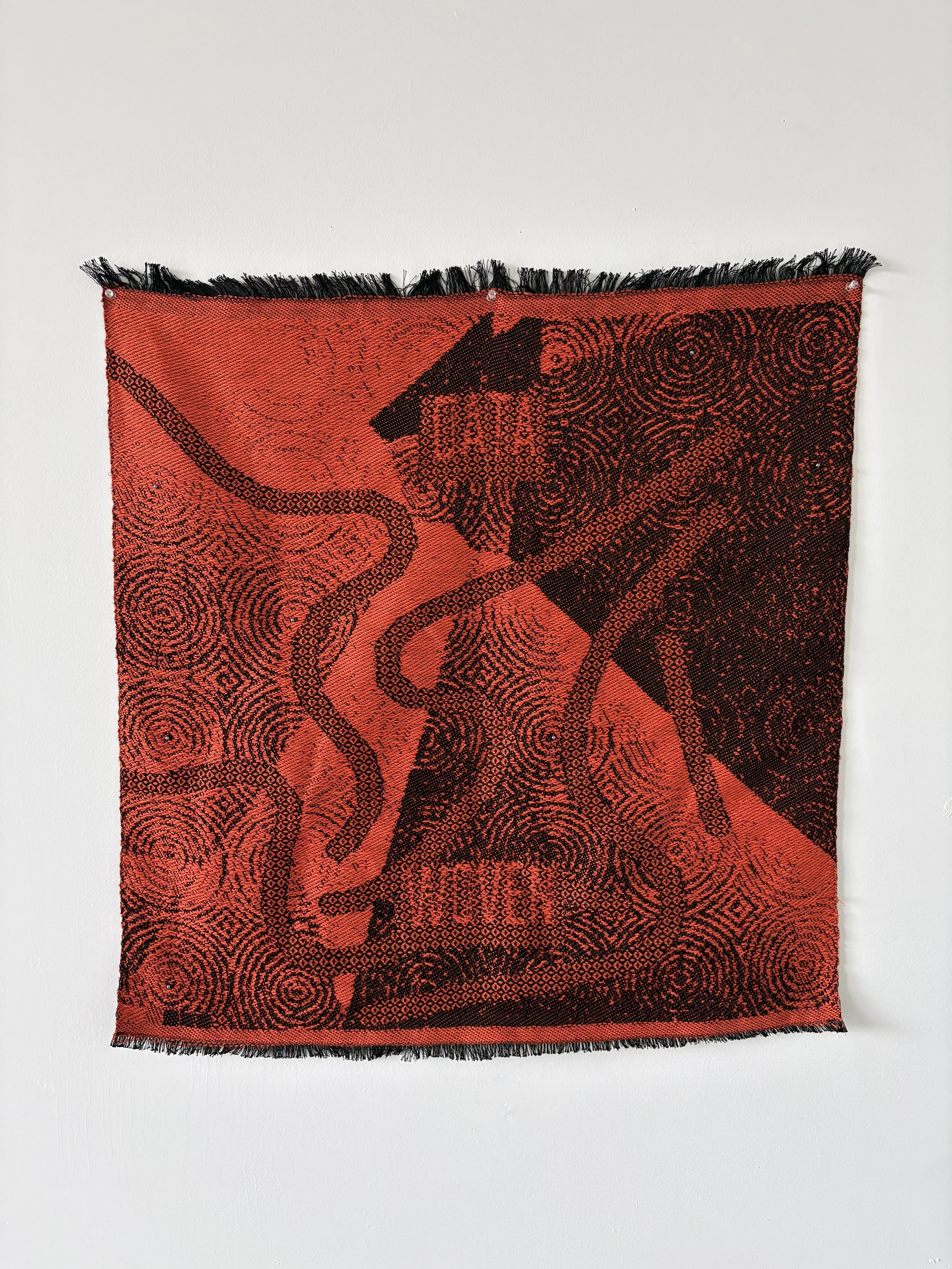
This artwork, which is part of an extended series of weavings on a AVL Jacquard Loom, is composed of digital scraps that I’ve collected over the years – screenshots, speculative narratives and bits of text – and explores what is to be gleaned from the missing pieces in queer digital archives; approaching the lack of information to speculate what can exist.
—————
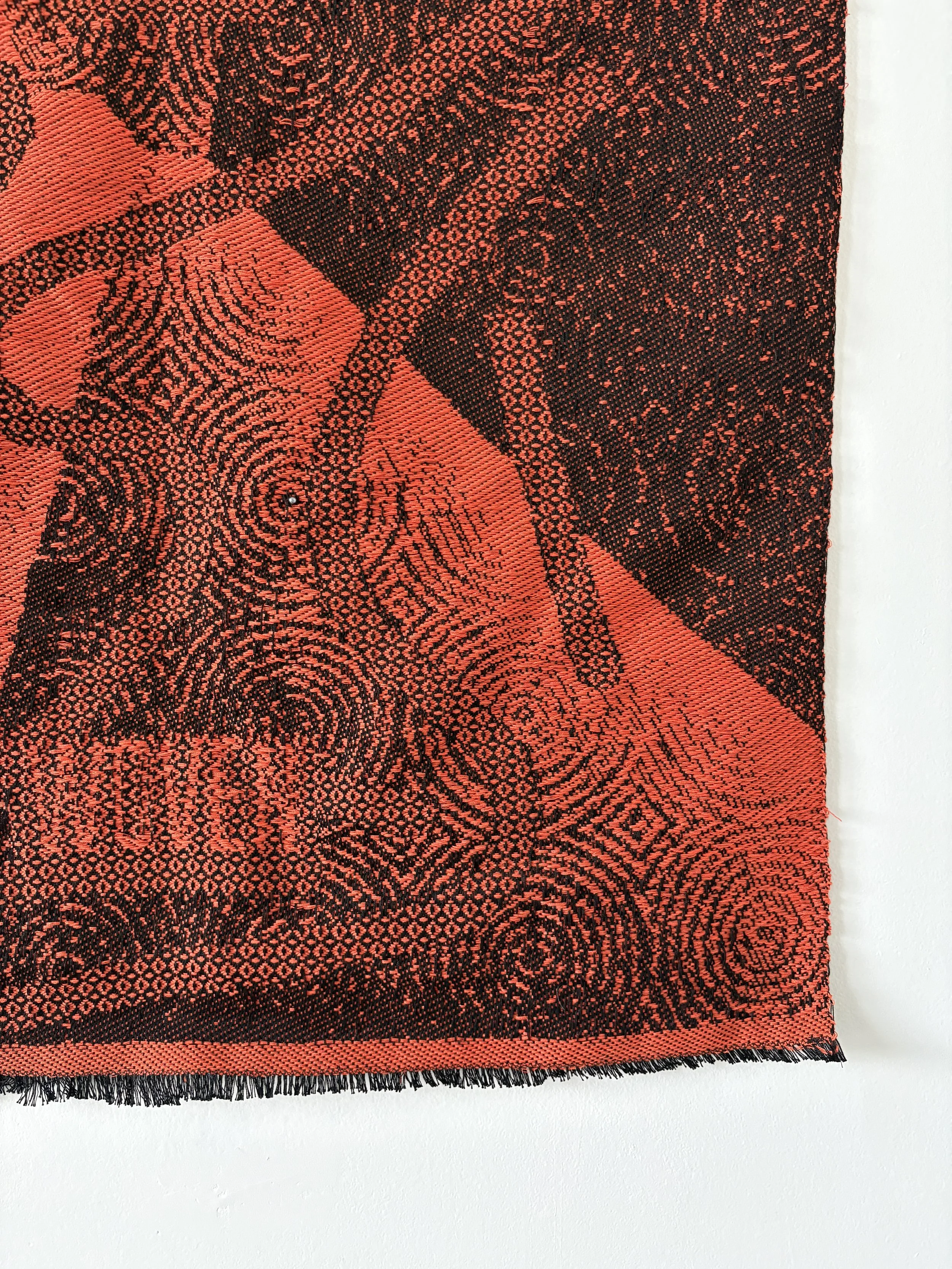
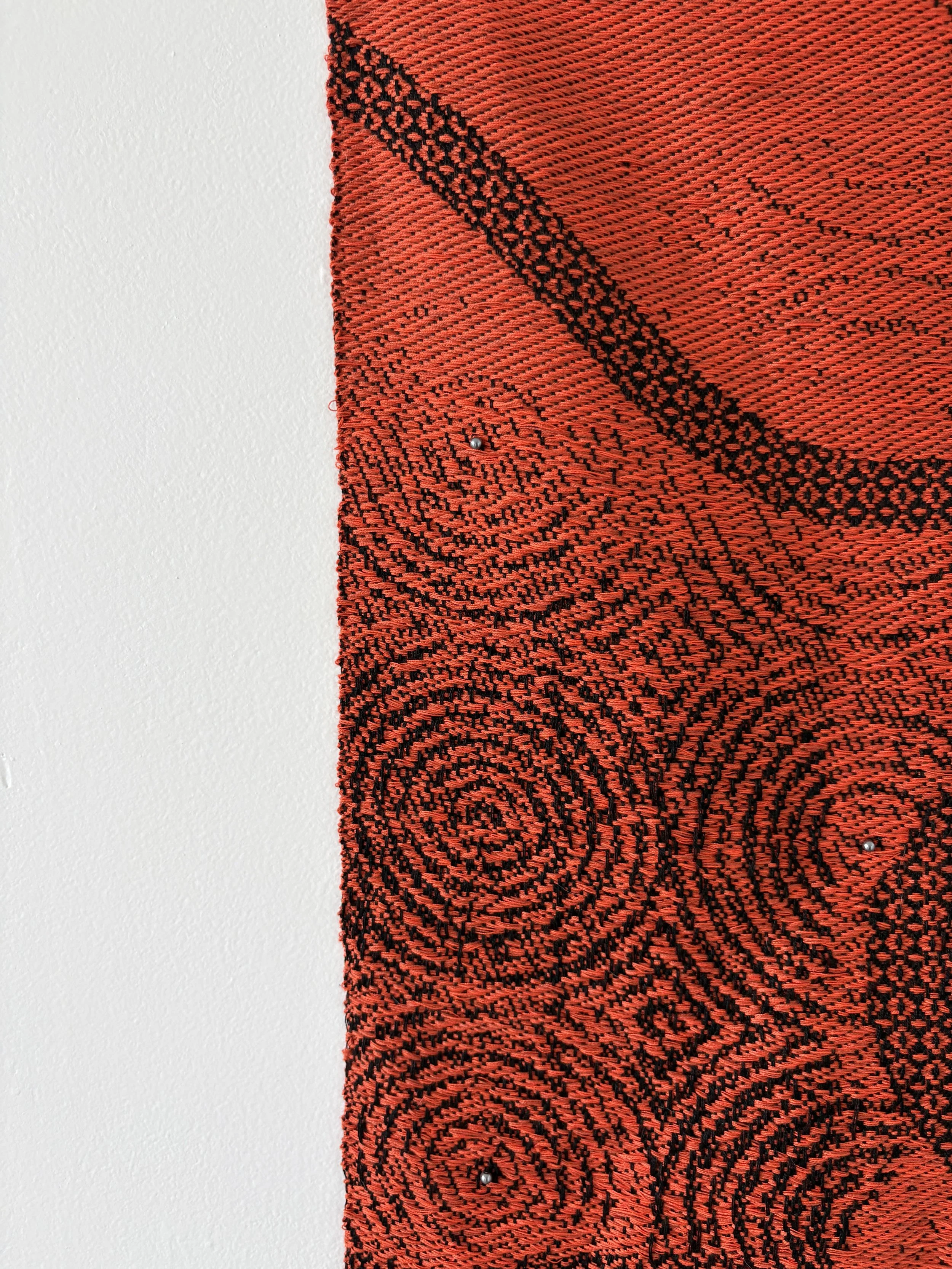
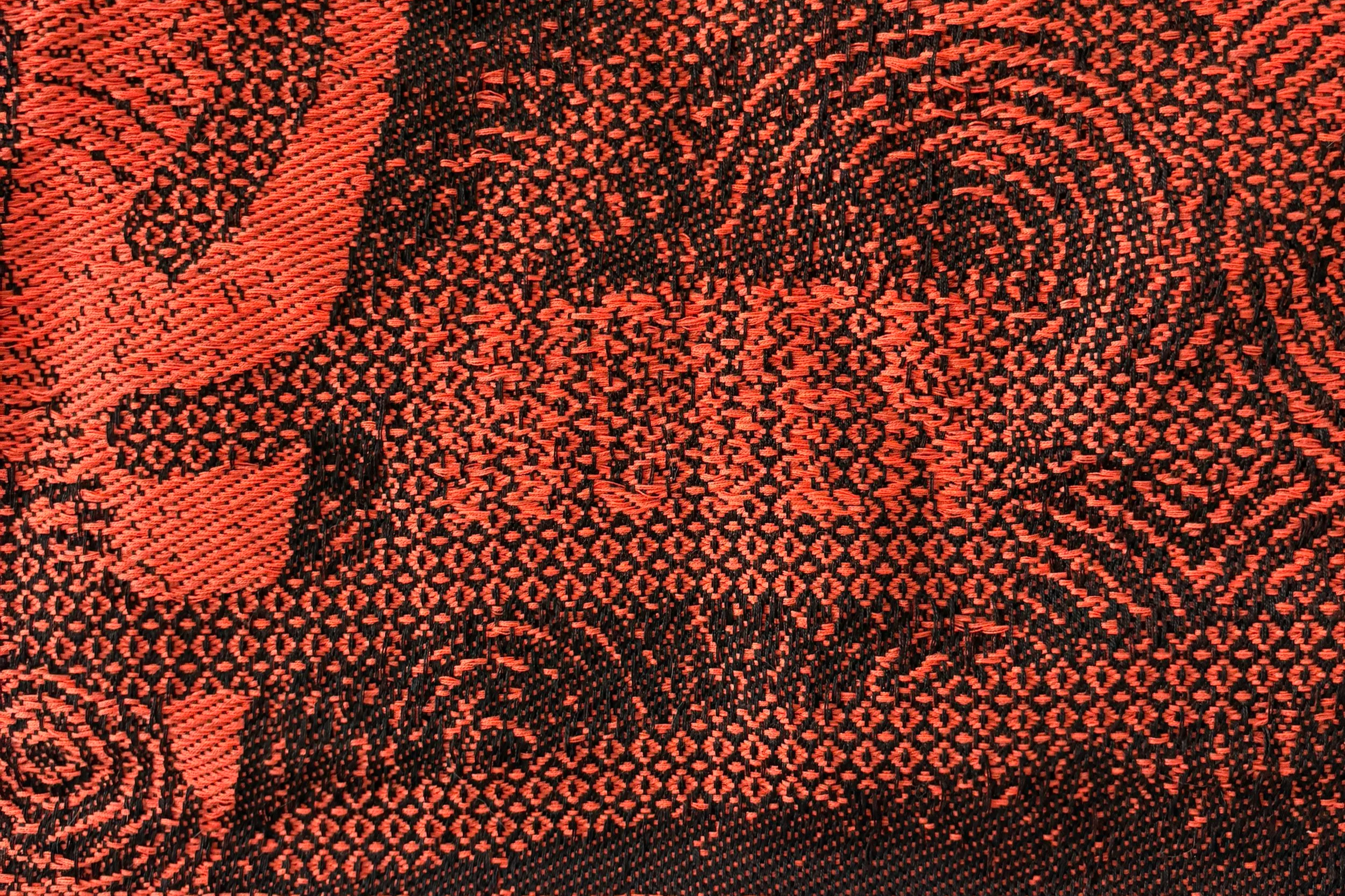
This weaving in particular is composed of adapted text from author Claire L. Evans, “for centuries, data is something you weave,” (shortened to Data, Woven), which is overlaid on a “I’m not a robot” captcha test screenshot (can you spot the shortest line?) [5] It is flecked with metal beads, sewn in by hand, as an act of visual and literal mechanic disruption.
This work acts as a disruption of information, questioning what data is held, and what information is woven into the fibers of history.
—————
Guerrero, Emily. Gossipy Scraps, Gossip(Ing) Archives, C Magazine, 2022.
Adair, Cassius. Delete Yr Account: Speculations on Trans Digital Lives and the Anti-Archival, Part I: Are You Sure? DREC, 23 Aug. 2019
McKinney, Cait. The Anti-Archive as Trans Archival Future: Response Text for Trans Archival Futures Screening and Talk with Chase Joynt and Chris E. Vargas, VIVO Media Arts Centre, 2020.
Russell, Legacy. Glitch Feminism: A Manifesto. Verso Books, 2020.
Evans, Claire L. Broad Band: The Untold Story of the Women Who Made the Internet. New York: Portfolio/Penguin, 2018.